Mental Health Myths Debunked: Separating Fact from Fiction
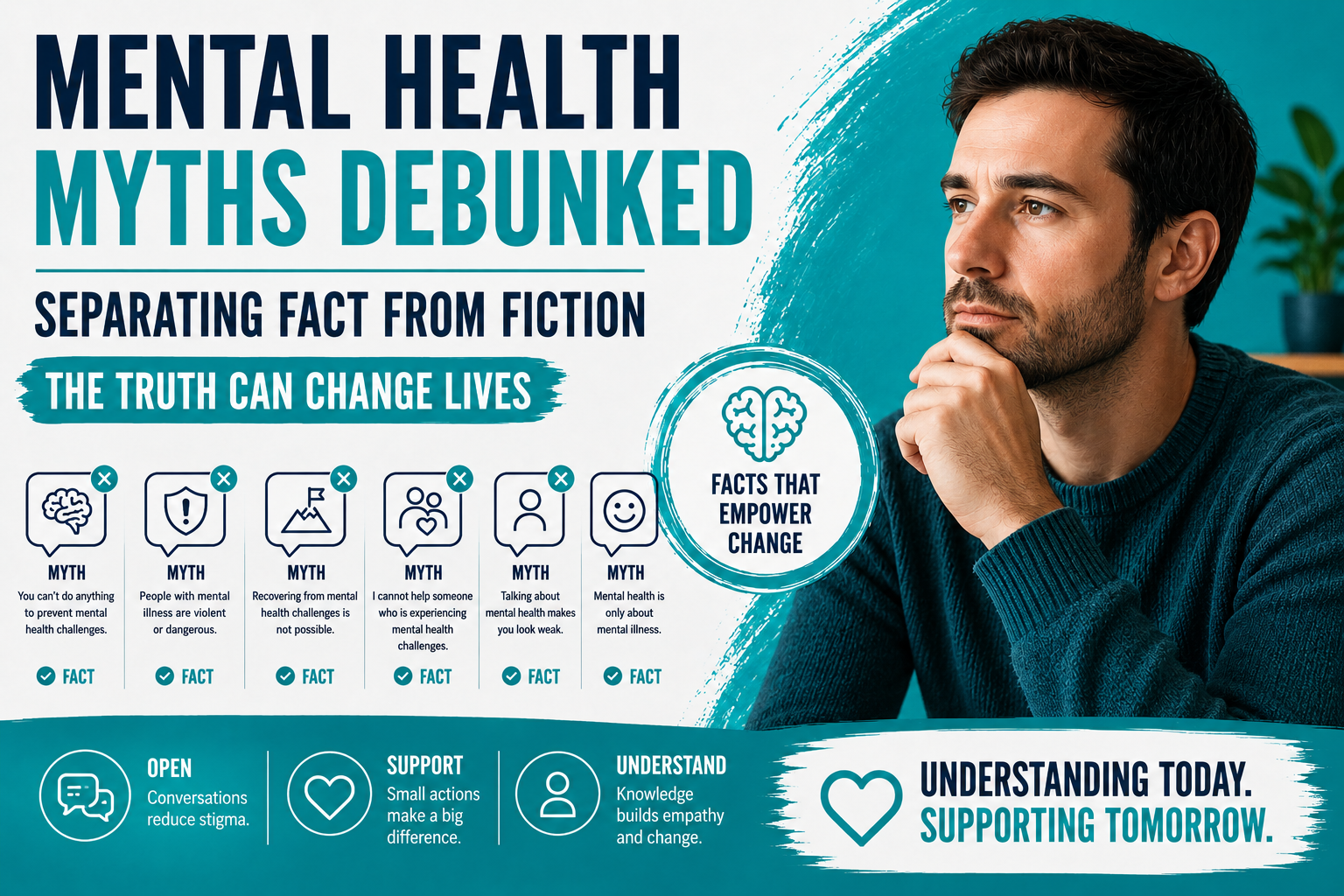
Mental Health Myths Debunked: Separating Fact from Fiction
Despite significant progress in mental health awareness over recent years, misconceptions and stigma still surround many aspects of emotional wellbeing. These myths can prevent people from seeking support, discourage open conversations, and contribute to feelings of shame and isolation.
At Effusion Therapy, we believe that education plays a vital role in improving mental wellbeing. By challenging common misconceptions, we can create a more reflective and compassionate society where individuals feel empowered to seek help when they need it.
Here, we explore some of the most common myths surrounding mental health and reveal the facts behind them.
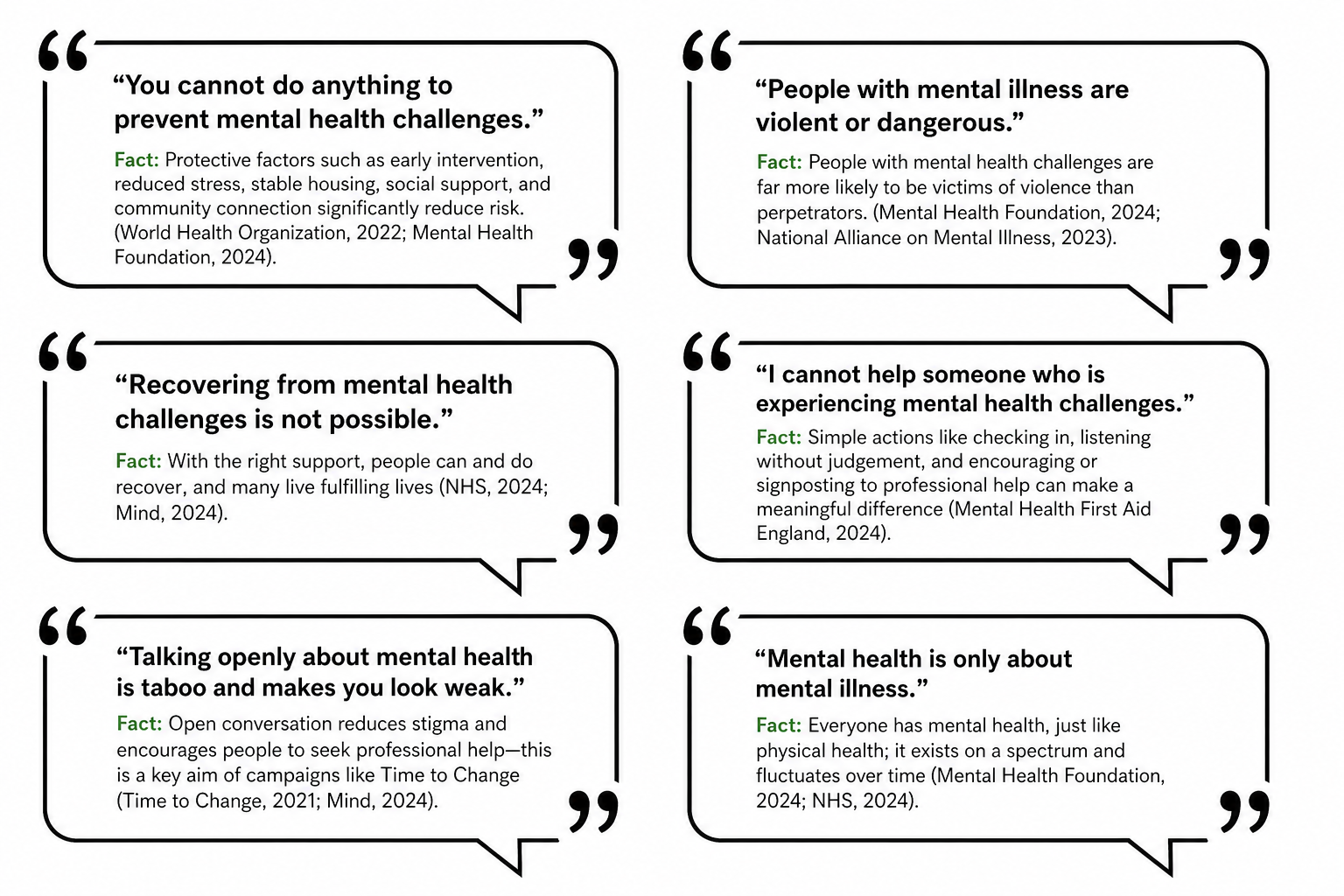
Myth 1: "You Cannot Do Anything to Prevent Mental Health Challenges"
One of the most widespread misconceptions is that mental health problems are unavoidable and entirely beyond our control.
While it is true that certain factors, such as genetics or unexpected life events, may increase vulnerability, there are many protective measures that can significantly reduce the risk of developing mental health difficulties.
Research from organisations including the World Health Organization and the Mental Health Foundation highlights several factors that promote good mental wellbeing, including:
- Maintaining strong social connections.
- Managing stress effectively.
- Accessing early support when difficulties arise.
- Living in stable and secure environments.
- Participating in community activities.
- Prioritising physical health through exercise, nutrition, and sleep.
Mental health, much like physical health, benefits from proactive care. Taking steps to nurture emotional wellbeing can improve resilience and help individuals cope more effectively with life's inevitable challenges.
Myth 2: "People with Mental Illness Are Violent or Dangerous"
This harmful stereotype has been perpetuated for many years through inaccurate media portrayals and misunderstanding.
In reality, people experiencing mental health difficulties are far more likely to be victims of violence rather than perpetrators.
The vast majority of individuals living with conditions such as anxiety, depression, bipolar disorder, or schizophrenia pose no threat to others. Most people experiencing mental health challenges continue to work, maintain relationships, care for families, and contribute positively to their communities.
Unfortunately, this myth often increases stigma and can discourage people from seeking professional support due to fears of being judged or labelled.
Compassion, understanding, and accurate information are essential in challenging these damaging stereotypes.
Myth 3: "Recovery from Mental Health Challenges Is Not Possible"
Many people believe that once someone develops a mental health condition, they will struggle indefinitely.
The reality is far more hopeful.
With appropriate support, treatment, and coping strategies, many individuals recover fully or learn to manage their symptoms successfully while leading fulfilling and meaningful lives.
Recovery looks different for everyone. For some, it may involve overcoming a specific period of anxiety or depression. For others, recovery may mean developing effective ways to manage long-term conditions while continuing to pursue personal goals, relationships, and career aspirations.
Professional therapy can play an important role in this journey by helping individuals:
- Understand their experiences.
- Develop healthy coping mechanisms.
- Process difficult emotions.
- Build confidence and resilience.
- Improve relationships and communication.
At Effusion Therapy, we work collaboratively with clients to support their individual goals and foster lasting positive change.
Myth 4: "I Cannot Help Someone Experiencing Mental Health Challenges"
Many people worry that they do not have the expertise or training required to support someone struggling with their mental health.
While professional intervention is often important, simple acts of kindness can make a significant difference.
You do not need to have all the answers to support someone effectively.
Helpful actions may include:
- Checking in regularly.
- Listening without judgement.
- Showing empathy and patience.
- Encouraging professional support where appropriate.
- Offering practical assistance during difficult periods.
- Helping reduce feelings of isolation.
Sometimes, simply knowing that someone cares can be incredibly powerful.
Of course, supporting others should not come at the expense of your own wellbeing. Maintaining healthy boundaries and encouraging professional help where necessary is equally important.
Myth 5: "Talking About Mental Health Makes You Look Weak"
Historically, many people were encouraged to keep emotional struggles private. As a result, discussing mental health has often been viewed as a taboo subject.
Thankfully, attitudes are changing.
Open conversations about mental health help reduce stigma, increase understanding, and encourage individuals to seek support sooner.
Acknowledging that you are struggling is not a sign of weakness. In fact, it often requires considerable courage, honesty, and self-awareness.
Just as we would seek medical advice for a physical injury, seeking support for emotional difficulties should be viewed as a normal and healthy step.
Campaigns such as Time to Change and the growing public discussion around mental wellbeing have helped shift perceptions, but there is still more work to do.
Every constructive conversation contributes to breaking down stigma.
Myth 6: "Mental Health Is Only About Mental Illness"
Mental health is often misunderstood as referring solely to diagnosed conditions.
However, everyone has mental health, just as everyone has physical health.
Mental wellbeing exists on a spectrum and naturally fluctuates throughout life. Stressful events, major life transitions, bereavement, work pressures, and relationship challenges can all affect how we think, feel, and function.
Experiencing periods of poor mental health does not necessarily mean someone has a mental illness.
By recognising mental health as an integral part of overall wellbeing, we can adopt healthier habits, seek support when needed, and encourage more open discussions.
Seeking Support Is a Positive Step
Mental health myths and misconceptions continue to create barriers that prevent people from accessing support. By challenging these myths and promoting understanding, we can help create a society where seeking help is viewed as a strength rather than a weakness.
At Effusion Therapy, we provide a safe, confidential, and compassionate space where individuals can explore their thoughts, emotions, and experiences without fear of judgement.
Whether you are experiencing anxiety, low mood, stress, relationship difficulties, or simply need someone to talk to, professional support is available.
You do not have to face life's challenges alone.